


Beyza Aras
Feb 11, 2026What Is a Source Term Vector?
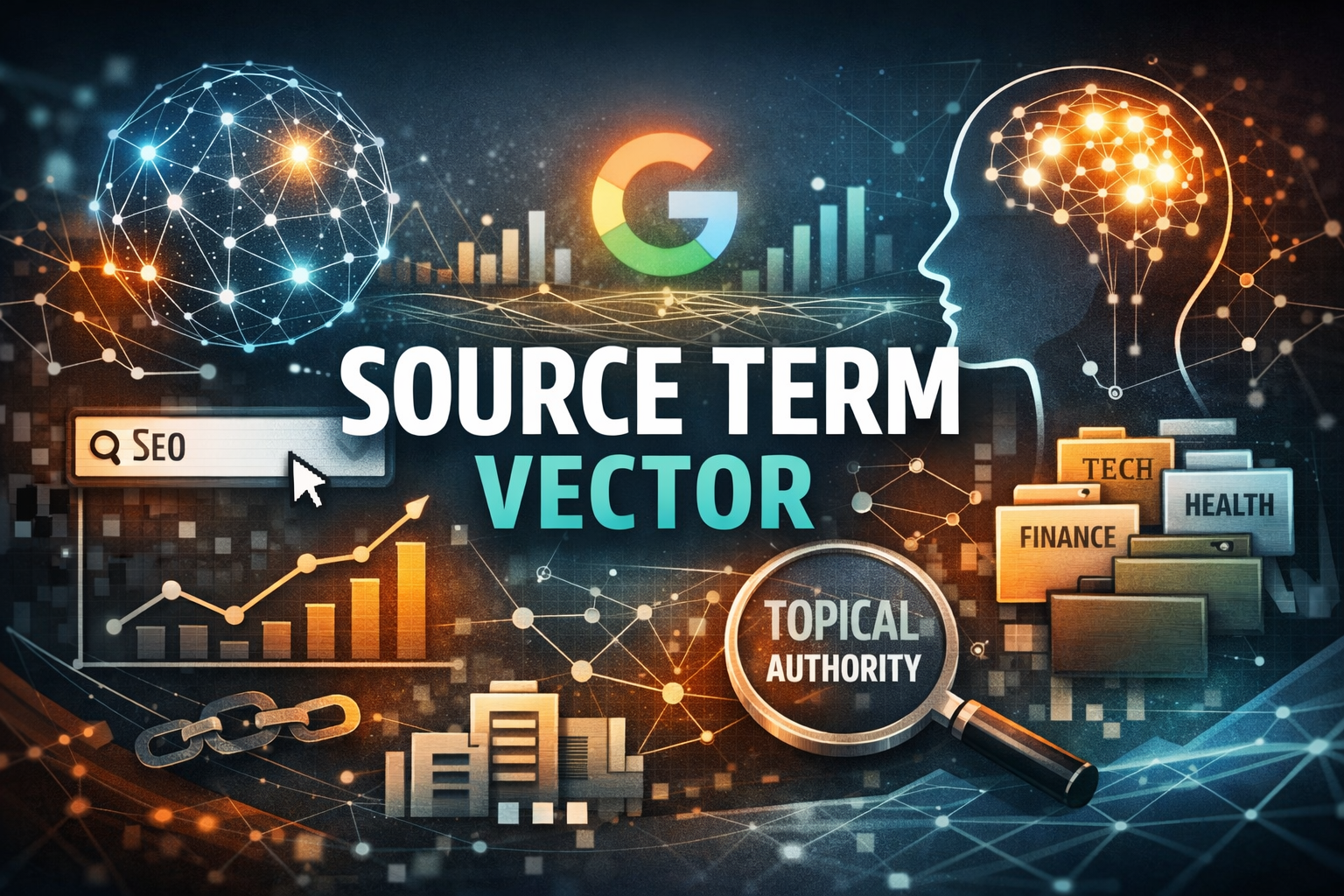
A Source Term Vector is a conceptual expertise profile that shows which topics a website is associated with by Google, based on the content it produces over time, the queries that content matches, and feedback from the external ecosystem. Search engines analyze which terms a source consistently aligns with, which topic clusters it is considered trustworthy in, and which query groups it gains priority within. As a result of this analysis, an invisible topical map is formed for each site. This map is defined as the Source Term Vector. Correctly constructing this vector is critical for achieving sustainable success in SEO strategies.
How Is a Source Term Vector Formed?
A Source Term Vector is not created by a single piece of content; it is shaped by data accumulated over time. Google determines the semantic boundaries of a source by analyzing content texts, heading structures, internal linking networks, anchor text distribution, user behavior signals, and external links together. In this process, recurring terms, entity relationships, and query match frequency are especially decisive.
When a site consistently produces content within a specific topic cluster, it gains higher tolerance and priority in queries related to that topic. For example, a site that regularly publishes content around concepts such as “semantic SEO,” “entity SEO,” and “Google algorithm analysis” is gradually perceived by search engines as the natural authority in that field. This reduces ranking volatility and provides long-term stability.
The Relationship Between Source Term Vector and Topical Authority
Topical authority is established when a site demonstrates depth, coverage, and consistency within a specific subject area. A Source Term Vector is the algorithmic projection of this expertise. In other words, while topical authority is the result of a strategy, the Source Term Vector is the mathematical counterpart of that strategy on Google’s side.
The more clearly and intensely a source’s vector is focused on a specific topic cluster, the stronger the signal of topic ownership it produces. Disorganized content structures weaken the direction of the vector. Therefore, when making decisions such as category expansion, adding new content, or entering a different industry, the existing Source Term Vector must always be analyzed.
What Is Source Inconsistency?
If a Source Term Vector drifts away from its natural area of expertise over time, this situation is defined as semantic drift. This usually occurs due to uncontrolled category expansion, content created to chase irrelevant traffic, or unrelated landing pages opened under commercial pressure. When Google detects sudden changes in the query clusters a source matches, it re-evaluates the source’s topic trust score.
For example, if a technology-focused site suddenly starts producing content about health, finance, and crypto, the algorithm cannot clearly classify which topic the source belongs to. This leads to three outcomes:
- Ranking volatility increases
- Priority tolerance decreases
- Indexing trust for new content weakens
Semantic drift is usually noticed only after traffic loss occurs; however, the real problem begins with invisible contextual blurring. For this reason, regularly analyzing the content map is critically important.
How Is Source Term Vector Inconsistency Detected?
Vector degradation is not a directly observable metric; however, it can be analyzed through indirect signals. Query match clusters, Google Search Console performance distribution, and content cluster structure are especially decisive in this regard. If a site receives similar levels of traffic from different and unrelated query groups, the direction of the vector may be weakening.
The table below shows the difference between a healthy and a degraded Source Term Vector:
| Criteria | Healthy Vector | Degraded Vector |
| Query Cluster | Concentrated within a specific topic cluster | Scattered and irrelevant |
| Internal Link Structure | Thematic and hierarchical | Random and weak |
| Anchor Text | Consistent entity usage | Broad and ambiguous |
| Ranking Behavior | Stable and predictable | Volatile and fragile |
| Google Perception | Clear topic ownership | Classification ambiguity |
This analysis helps determine whether the SEO strategy needs to be repositioned.
How Is a Source Term Vector Realigned?
When a Source Term Vector becomes degraded, the solution is not aggressive content removal, but contextual realignment. To achieve this, three core strategies are applied:
- Cluster Reinforcement: Content within the primary topic cluster is updated, expanded in depth, and strengthened with increased entity connections.
- Internal Link Re-Architecture: The hierarchical internal linking structure is reorganized, turning core topic pages into authority hubs.
- Repositioning Irrelevant Content: Instead of deleting it entirely, moving such content to subcategories or applying a separate domain strategy can be considered.
The goal in this process is to clearly communicate the following signal to Google:
“This source is primarily an authority on topic X.”
As vector density increases, tolerance levels for relevant queries rise, allowing the site to gain positioning more quickly in competitive keywords.
How Is a Clear Topic Ownership Signal Sent to Google?
For Google to perceive a source as an authority, three core signals are required: semantic consistency, entity density, and user engagement stability. Producing content alone is not sufficient; the content must reinforce and support each other. For this reason, implementing the pillar page + cluster model is essential.
A structure that can be applied to establish strong topic ownership includes:
- One comprehensive pillar piece of content (main topic)
- 8–15 supporting sub-cluster pieces
- A consistent anchor text structure
- A clear category architecture
- Repeated use of the same entity set
For example, for an SEO-focused site, the core entity set might include:
- Semantic SEO
- Topical Authority
- Entity SEO
- Google Ranking Model
- Query Intent
When these entities are used consistently and contextually, the Source Term Vector becomes more defined and algorithmic trust increases.
Frequently Asked Questions
Is Source Term Vector an officially defined concept by Google?
No, Source Term Vector is not an officially announced term by Google. It is a theoretical and analytical model used to explain Google’s source classification and query matching systems. However, when algorithmic behaviors are examined, it is clearly observable that websites form topic-based vector profiles.
Is Source Term Vector the same as Topical Authority?
No, they are not the same, but they are directly related. Topical authority is a strategic content production model, whereas the Source Term Vector is the mathematical outcome of that strategy on the search engine side. In other words, topical authority is built; the Source Term Vector emerges.
More resources

What Is GEO Consulting? The Era of Generative Engine Optimization
Digital marketing is experiencing its most profound shift since the dawn of the commercial internet....

What Is SEO Consulting? What Does SEO Consulting Entail?
In today’s digital environment, visibility is the primary measure of success. As search engine algor...

What is Cohort Analysis? Understanding User Behaviors through Segmentation
In the world of digital marketing and product management, making data-driven decisions is no longer...