


Burcu Aydoğdu
Feb 5, 2026How to Measure Generative Engine Optimization (GEO)? KPIs and Reporting Model for AI Visibility

The digital marketing world is undergoing a major transformation from search engine optimization toward AI driven answer systems. In this new era, Generative Engine Optimization measurement is of vital importance for brands to sustain their digital presence. While traditional SEO metrics focus on the user clicking a link and visiting a website; GEO measures how much AI (LLM) references your brand and how you are positioned within answers. The rise of systems such as Google SGE (Search Generative Experience), Perplexity, Claude, and ChatGPT makes a new data driven analytics approach mandatory. In this content, we will examine in depth the mathematical formulas of gaining visibility in AI engines and how this process should be reported.
AI engines do not present data directly; instead, they synthesize it from multiple sources to create new content. This makes classic metrics such as click through rate (CTR) insufficient on their own. The point we must now focus on is the share of the answer delivered by AI and how frequently your brand is seen as a reliable source. In Generative Engine Optimization analytics processes, not only the accuracy of the data but also how much authority the brand holds in semantically related topics should be measured. To be successful in the digital strategies of the future, you need to master not only search volumes but also AI’s conceptual association models.
Unlike traditional SEO, Generative Engine Optimization measurement
In traditional SEO work, success is generally measured by ranking in the top three positions for a specific keyword. However, when it comes to Generative Engine Optimization measurement, the concept of ranking gives way to the dynamics of being cited and being part of the answer. AI engines tend to provide the user with a single final answer. Having your brand name mentioned in that answer is the strongest proof that your brand is accepted as an authority. Pageview counts in classic metrics are replaced in the GEO universe by answer interaction and attribution quality. This shift requires our measurement tools and strategic perspective to evolve as well.
Ranking vs. Citation: Instead of classic SERP rankings, the number and order of citations within the AI answer should be tracked.
Click vs. Answer Share: Rather than the user coming to the site, how much space the brand occupies in the information AI provides to the user is important.
Keyword Based vs. Semantic Based: Not only keyword matching, but topical integrity and authority score are the cornerstone for Generative Engine Optimization analytics.
Single Page vs. Knowledge Pool: Instead of the performance of a single page, the brand’s weight within the Knowledge Graph across all relevant topics is measured.
When measuring, it is necessary to go beyond Google Search Console data. Special bots and semantic analysis tools are used to determine how much of the content generated by AI models uses your brand as a source.
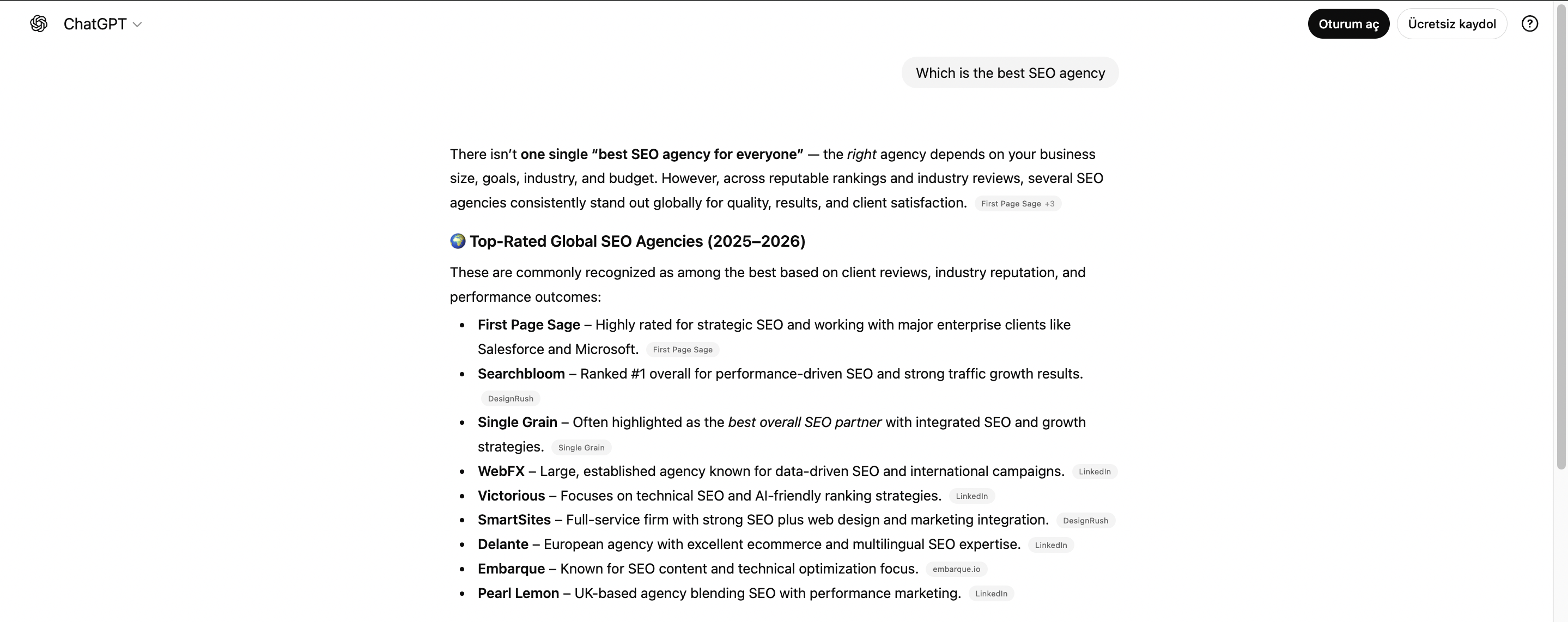
For example, in the answer given to a user’s question “Which is the best SEO agency?”, which position your brand name appears in and how positive the tone of that answer is are next generation performance indicators. Generative Engine Optimization measurement, therefore, is not only a technical data tracking process but also a reputation and trust analysis process.
Critical KPIs for AI Visibility and Generative Engine Optimization Analytics
To track performance in AI engines, there is a need for defined, specific KPIs. Generative Engine Optimization analytics covers the process of monitoring and optimizing these metrics regularly. One of the most critical metrics, Citation Rate, indicates how frequently your content is cited by AI. Another important KPI is the Brand Sentiment in AI metric; the tone of the language AI uses when mentioning your brand (positive, neutral, or negative) is decisive for your brand image. These data are the elements that determine your brand’s share of intelligence in the digital world.
| Metric Name | Description | Importance for GEO |
| Citation Rate | The percentage of times the brand is cited as a source in AI answers. | Represents authority and trustworthiness. |
| Response Position | Where in the answer the brand name or link appears. | Provides visibility and user trust. |
| Semantic Compatibility | How much the content matches the concepts AI understands. | Increases success in reaching the right audience. |
| Brand Sentiment | The tone of the AI generated content about the brand. | It is the digital counterpart of reputation management. |
As seen in the table above, Generative Engine Optimization analytics focuses not only on quantitative data but also on qualitative analyses. For example, the Semantic Relevance metric measures where your content is positioned in AI’s embedding space. If your content has a mathematically high correlation with the topic you are targeting, AI engines will reference you more. This proves that in Generative Engine Optimization measurement processes, content quality is as important as technical data. When defining your KPIs, you must ensure that each of them aligns with your business goals and the operating principles of AI.
Citation and Generative Engine Optimization Measurement Techniques in LLM Responses
Being included in LLM answers is not only about producing quality content but also about presenting that content in a structure that AI can read and trust. Among the most common Generative Engine Optimization measurement techniques are Reverse Prompting and AI Benchmarking methods. Queries about your brand are directed to AI tools, and a dataset is created based on the answers received. Within this dataset, your dominance compared to competitors, which sources are referenced more frequently, and the freshness of the information are analyzed. These techniques provide concrete outputs that directly affect strategic decision making mechanisms.
AI engines track certain trust signals (EEAT: Experience, Expertise, Authoritativeness, Trustworthiness) while processing data. Therefore, when performing Generative Engine Optimization measurement, it is necessary to test how these signals are perceived by AI. For example, a health article being written by a doctor or a financial analysis coming from an accredited institution increases the probability that AI will reference that source. Generative Engine Optimization analytics tools can help you create an AI Trust Score by examining your website’s schema structures, link profile, and content depth. These technical data provide the insights you need to update your content strategy in real time.
Another measurement technique is the Direct Response Attribution model. In this model, the click through rates of links included in the AI’s answer and the conversion rates of those clicks are tracked. Platforms like Perplexity show sources clearly, making this kind of Generative Engine Optimization measurement easier. However, in more closed systems like ChatGPT, the focus should be on the frequency of brand mentions within the query. These analyses serve as a critical guide for deciding which channels and content types digital marketing budgets should be allocated to.
Content Performance Evaluation: Reporting with Generative Engine Optimization Analytics
For analyses and data to have value, they must be transformed into a systematic reporting model. A report prepared with Generative Engine Optimization analytics should cover not only numbers but also strategic areas for improvement. Establishing a Baseline in the reporting process is critical to seeing the impact of optimization efforts. For example, the percentage of queries conducted over Perplexity and Google SGE during a month in which your brand appears determines your target for the next month. This reporting cycle should be integrated with the principle of continuous improvement.
Scope Definition: It is clarified which AI engines (GPT 4o, Gemini, Claude, etc.) will be analyzed.
Query Set Creation: A list is prepared consisting of brand name, product category, and informational queries.
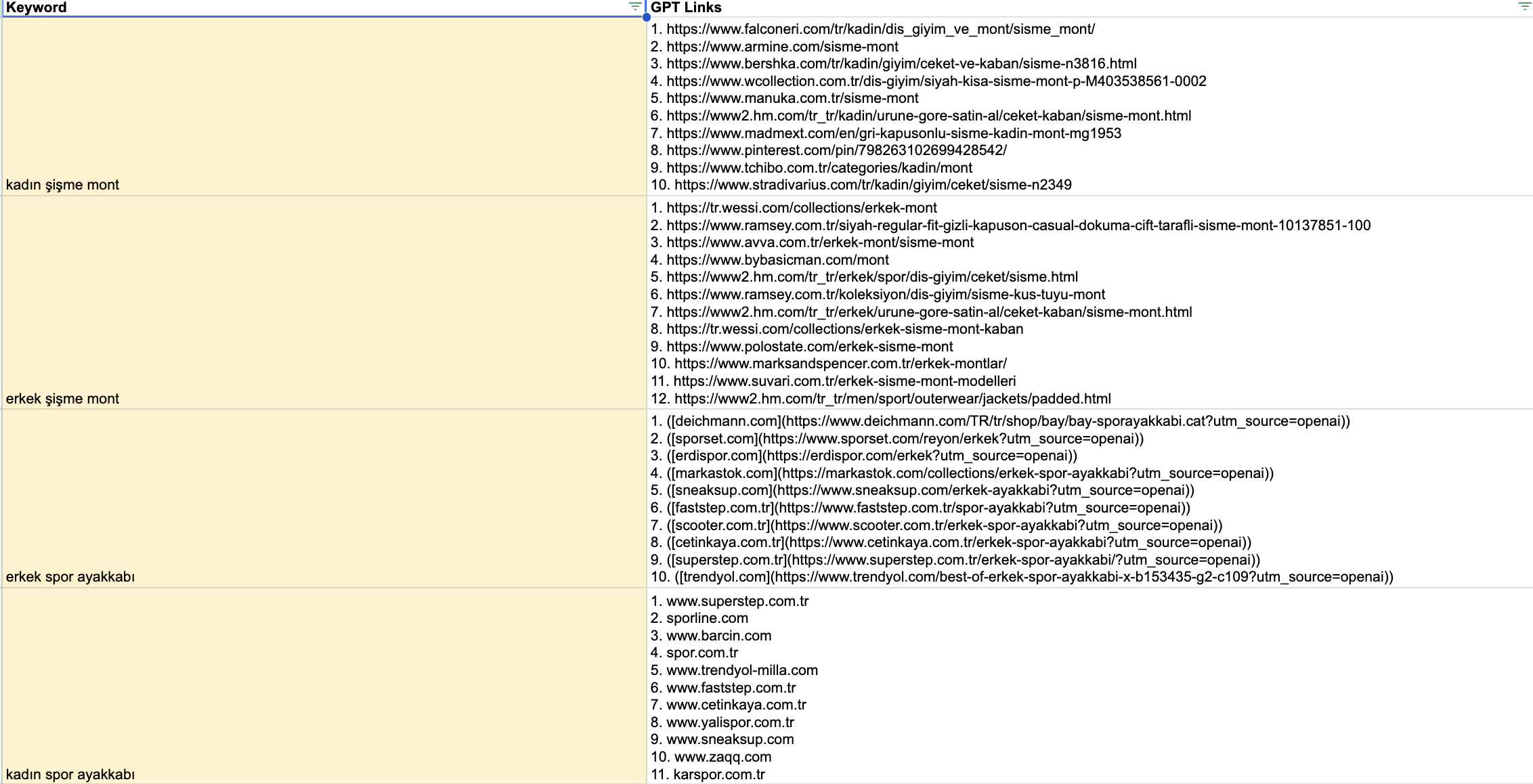
Data Collection: AI answers are collected via manual or automated tools and Generative Engine Optimization measurement is performed.
Competitor Analysis: Topics where competitors are referenced more and the structure of those contents are examined.
Action Plan: Semantic content updates and technical fixes are planned for the areas where performance is lacking.
A successful Generative Engine Optimization analytics report should be capable of proving the brand’s authority in the digital ecosystem to stakeholders. These reports should evaluate not only textbased answers but also the brand’s presence within visual and table content generated by AI.
For example, if AI creates a comparison table and your brand appears in the advantageous part of that table, this is a high success indicator. Quantifying such qualitative successes is essential to understand GEO’s ROI value.
Visualizing data during reporting helps complex Generative Engine Optimization measurement results be understood better. Charts such as heat maps, trend lines, and competitor comparison radars should be used. In addition, identifying misinformation AI presents about your brand and the work to correct these errors should be part of the report. A GEO report is not just a performance document, but also a report card of the brand’s accuracy and trust in the digital world.
Future Strategy: Generative Engine Optimization Measurement and Artificial Intelligence Integration
In the future, search engines will cease to be simple indexes and will become personalized digital assistants. In this transformation, Generative Engine Optimization measurement processes will also be automated by AI itself. LLM as a judge systems have reached a level where they can pretest for brands how AI friendly a piece of content is. For companies to survive in this new ecosystem, they must place measurement processes at the center of their workflows. Static SEO strategies will give way to flexible GEO strategies that adapt to AI’s dynamic learning models.
From a strategic perspective, Generative Engine Optimization analytics should aim not only to analyze past data but also to predict future trends. Identifying which topics AI is searching for more sources on provides a major advantage in shaping the content production calendar accordingly. For example, in a world where Zero Click Search rates are increasing, GEO’s ultimate success is for your brand to remain in the user’s mind as a reliable authority even if the user does not visit your site. To achieve this success, making data driven decisions and continuously measuring those decisions is the only way.
As a result, Generative Engine Optimization measurement has become one of the most critical competencies of modern digital marketing. As the algorithms of AI engines change, we must also update our measurement and reporting methodologies. Brands that present transparent, honest, and highquality information will always be rewarded more by AI. On this journey, using Generative Engine Optimization analytics tools effectively will put you one step ahead of your competitors and guarantee your brand’s future in the AI era. Digital visibility is no longer just a matter of ranking, but a matter of intelligence and data integrity.
More resources

Detect Performance Drops Early with Anomaly Detection
In digital products, the most critical problems are often the ones noticed the latest. Traffic drops...

How to Identify Non-Indexed Pages?
If you manage a website or monitor SEO processes, you know that the foundation of your digital prese...

How Do 404, 410, and 401 Status Codes Affect SEO?
In the digital world, the technical health of your website is one of the most fundamental factors de...