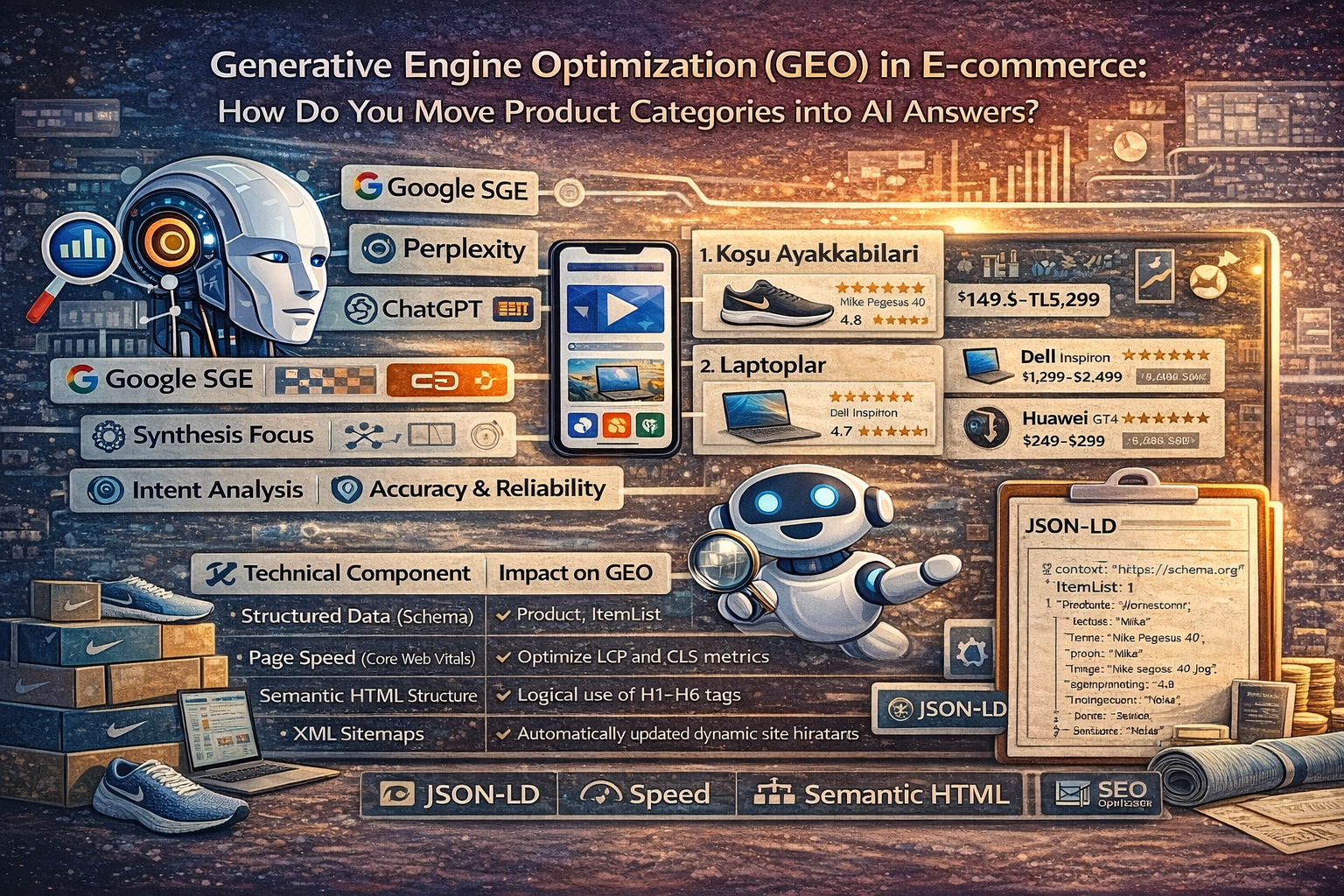
The digital marketing world has entered a new era as AI technologies fundamentally transform the search engine experience. Traditional SEO techniques are no longer sufficient on their own; the focus is now on Generative Engine Optimization (GEO) strategies in ecommerce. Generative AI models (Google SGE, Perplexity, ChatGPT) are redefining how product categories and lists are presented while providing direct answers to users’ questions. As an ecommerce site owner or manager, having your product categories appear in these AI answers (AI snapshots) means a direct source of authority and sales beyond organic traffic. GEO is not only a keywordfocused effort, but also the process of making data meaningful and presenting it in the most suitable format for AI models.
AI models operate through large language models (LLMs), scanning massive datasets across the internet and creating the most intentaligned synthesis for the user. For ecommerce sites, this makes it necessary for category pages to evolve from being simple product lists into structures that provide indepth information about that category, function as a user guide, and are supported by technical data. In this article, we will detail how to move your category pages to the center of AI answers and how to increase your visibility with modern Generative Engine Optimization (GEO) strategies in ecommerce.
Generative Engine Optimization (GEO) Strategies in Ecommerce and the NextGeneration Search World
While traditional search engines function as bridges that direct users to the relevant website, generative search engines (Generative Engines) aim to provide the user with a direct answer. This shift is both a risk and a major opportunity for ecommerce sites. Generative Engine Optimization (GEO) strategies in ecommerce are built to ensure your brand is mentioned within these answers as a recommended source or the best option. When scanning a product category, AI doesn’t just look at product titles; it evaluates the category’s scope, user reviews, price–performance balance, and level of expertise.
- Synthesis Focus: AI creates an answer by combining multiple sources. For your site to be part of this synthesis, you need highauthority, informationdense content.
- Intent Analysis: Users now ask complex questions such as “Which marathon shoes are suitable for asphalt and do not cause knee pain?” instead of “best fitness training shoes.”
- Accuracy and Reliability: AI models are programmed to avoid giving incorrect information. Therefore, the freshness and accuracy of data in product categories are critical for GEO.

To succeed in this new ecosystem, you must align your category hierarchy and content strategy with a “question answer” mechanism. By identifying the core questions users seek within a category and answering them comprehensively on your category pages, you can implement Generative Engine Optimization (GEO) strategies in ecommerce in the most efficient way. It should not be forgotten that AI will reference you not only when it sees you as a seller, but as a knowledge source.
Technical Infrastructure for Product Categories and Generative Engine Optimization (GEO) Strategies in Ecommerce
Technical SEO has always been important, but when it comes to GEO, technical perfection becomes a necessity. Making it easy for AI bots to crawl your site and structure your data is at the top of the Generative Engine Optimization (GEO) strategies in ecommerce list. The loading speed of your category pages, mobile compatibility, and especially structured data in JSONLD format enable AI to recognize your products. If an AI model cannot clearly read your product’s price, stock status, or user rating, it will not recommend that product in its answers.
| Technical Component | Impact on GEO | Recommended Action |
| Structured Data (Schema) | Enables AI to understand product and category attributes. | Use Product, ItemList, and FAQ Schema. |
| Page Speed (Core Web Vitals) | Affects bot crawl budget and user experience. | Optimize LCP and CLS metrics. |
| Semantic HTML Structure | Determines the hierarchical importance of content. | Logical use of H1–H6 tags. |
| XML Sitemaps | Enables faster discovery of new categories and products. | Automatically updated dynamic sitemaps. |
Technical optimizations in product categories function as a “road map” not only for search engines, but also for large language models that process data. For example, the URL structures and labels of filtering options (color, size, material, etc.) on a category page should be clear. Within Generative Engine Optimization (GEO) strategies in ecommerce, these technical details help AI say, “This site has the most specific and orderly data about this product group.” Especially the ItemList Schema structure allows AI to easily extract all products on the category page as a list.
Semantic Content Production: Category Management with Generative Engine Optimization (GEO) Strategies in Ecommerce
While keyword density matters in traditional SEO, conceptual depth and semantic relationships take priority in GEO. When creating product category content, instead of only saying “cheapest laptops,” you should provide information on topics such as “processor generations to consider when choosing a laptop,” panel types, and use cases. Generative Engine Optimization (GEO) strategies in ecommerce require content to be not only salesfocused, but also educational and guiding. AI accepts the content that explains a topic best and offers the broadest perspective as an “authority.”
Key points to consider in semantic content production:
- Comprehensiveness: Include all technical and practical information users wonder about regarding that product group on your category page.
- Entity Association: Link your products with relevant brands, technologies, and use cases (entities).
- Natural Language Processing (NLP) Alignment: Write your content in a natural flow that answers real questions people ask.
The “Category Description” section at the bottom of a category page should no longer be SEO clutter, but should transform into an article. This section should include the advantages, disadvantages, and comparative analyses of the relevant products. When Generative Engine Optimization (GEO) strategies in ecommerce are applied, AI can pull parts from this rich content and use your sentence in the “AI Snapshot” area it presents to the user. This directly increases clickthrough rates and brand awareness.

Data Structuring and Schema Usage: Generative Engine Optimization (GEO) Strategies in Ecommerce
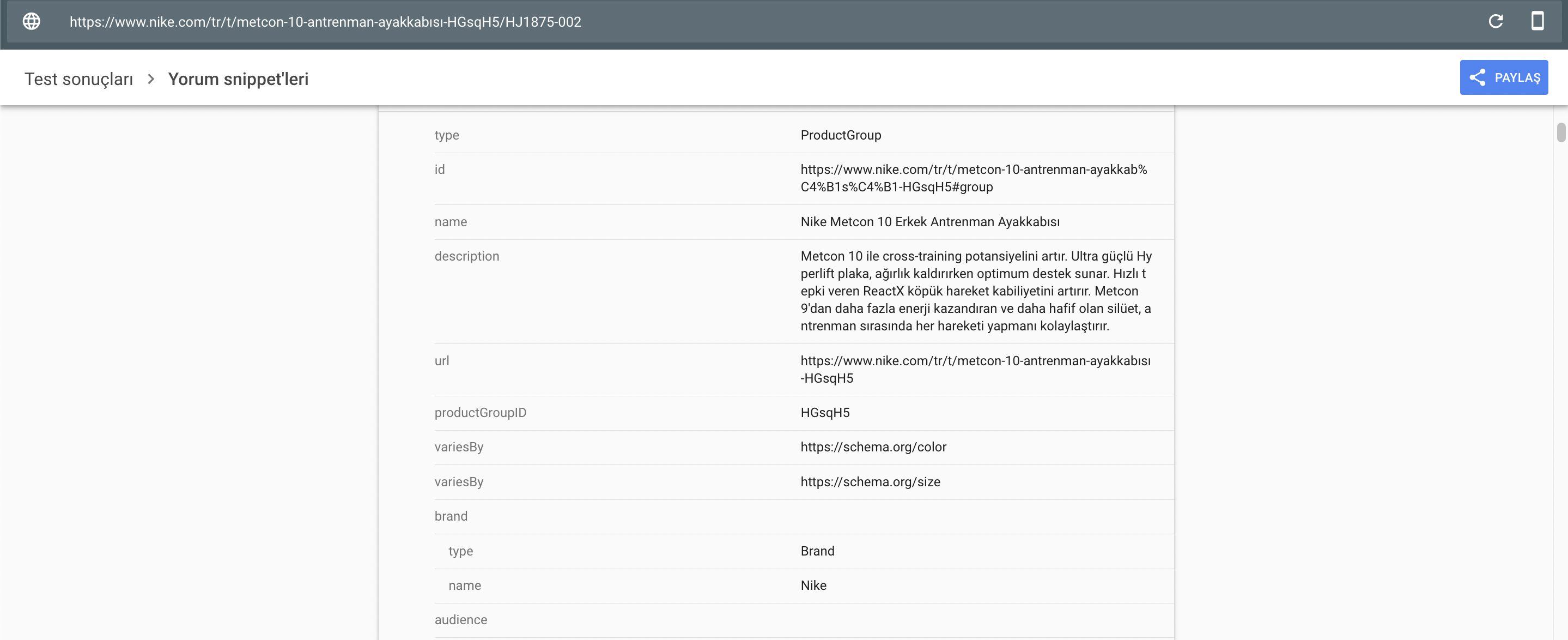
AI models are hungry for data, and how structured that data is directly affects the likelihood that the model will use it. For ecommerce sites, Schema.org markups play a critical role within Generative Engine Optimization (GEO) strategies in ecommerce. On your category pages, not only individual products but also the category itself must be defined as an entity. This helps AI understand the page’s purpose and value within seconds.
Critical Schema types to use for categorybased GEO include:
- BreadcrumbList: Shows the page’s place in the site hierarchy and provides context to AI.
- FAQPage: Enables frequently asked category questions to appear directly in AI answers (such as SGE).
- CollectionPage: Clarifies that the page is a product collection or category page.
- Review: Highlights user experiences and ratings across the category.
Having these markups complete and errorfree is a technical requirement within Generative Engine Optimization (GEO) strategies in ecommerce. AI prefers reliable data sources. If the price information on your page is specified with Schema and matches the visual data on the page, the AI model’s trust score for your site increases. This trust score is a hidden factor that directly influences your ranking in “Generative Search” results.
User Experience and Conversion: Achieve Success with Generative Engine Optimization (GEO) Strategies in Ecommerce
GEO is not only about driving traffic, but also about guiding incoming traffic toward conversion. A user who lands on a page recommended by AI expects their needs to be met. Generative Engine Optimization (GEO) strategies in ecommerce aim to increase the time on site and engagement of AIdriven visitors by putting user experience (UX) at the center. A clean design, quickly accessible filters, and a trustworthy payment process are indirect but highly effective complements to GEO.
You can follow these strategies to optimize user experience:
- Personalized Recommendations: Offer similar products aligned with the intent of the user coming via AI.
- Content Visualization: Use infographics, videos, and highquality visuals on category pages to address AI’s visual search and analysis capabilities.
- Trust Signals: Make elements like certifications, user reviews, and transparent return policies visible.
In conclusion, Generative Engine Optimization (GEO) strategies in ecommerce are not an option for ecommerce sites, but a survival strategy. In this era where search engines evolve with AI, you must transform your category pages into deep, technically flawless structures that both machines and humans can understand in the best way. GEO success will belong to brands that blend the right data with the right content and present it in AI’s language (technical structuring). By starting to optimize your category pages today, you can secure your place in the future search world from now. By working with an expert e-commerce SEO & GEO agency, you too can achieve your goals.